

PlasmaTalk Special Collaboration Webinar × Fraunhofer IFAM: Effects and Potential of Atmospheric-Pressure Plasma Treatment Under Controlled Gas Atmospheres
This session is a special collaboration webinar with the Fraunhofer-Gesellschaft, Europe’s largest applied research organization in the field of science and technology.
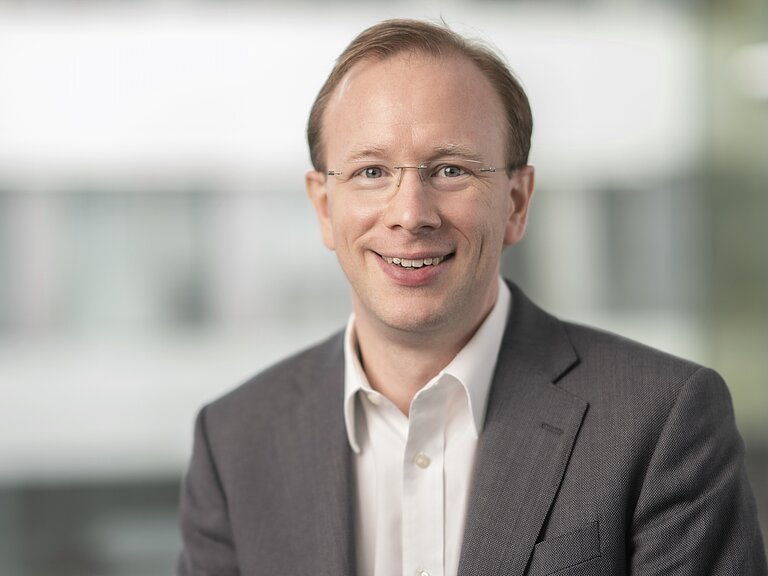
We are pleased to welcome Dr. Christoph Regula from Fraunhofer IFAM (Fraunhofer Institute for Manufacturing Technology and Advanced Materials) in Bremen, Germany, as our guest speaker. Within the Fraunhofer-Gesellschaft, IFAM is a research institute specializing in surface technologies and functional materials.
Dr. Regula is currently engaged in research on surface activation using atmospheric-pressure plasma systems, as well as nanotechnology coatings for a wide range of applications.
Today, there is growing demand for new technologies that can be applied in specialized industries. Against this background, this webinar will present selected research results and insights obtained from plasma treatment of various surfaces and materials under controlled gas atmospheres.
Presentation Overview
Effects and Potential of Atmospheric-Pressure Plasma Treatment Under Controlled Gas Atmospheres
Surface modification and surface functionalization using atmospheric-pressure plasma have been adopted in many production environments thanks to their high processing capability and ease of integration.
At the same time, quality requirements for high-value-added products such as fuel cells, medical applications, and various electronic components continue to become more demanding. As a result, more and more customers require advanced surface functionalization and other highly demanding performance characteristics. The question, then, is how to meet these stringent requirements while retaining the advantages of atmospheric-pressure plasma, such as high processing capability, implementation without vacuum equipment, and ease of maintenance.
Atmospheric-pressure plasma treatment is generally carried out under ambient atmospheric conditions. In such cases, oxygen plays an especially important role in both surface activation and plasma polymer layer deposition. Even when the process gas itself does not contain oxygen, the oxygen content of the surrounding atmosphere can often influence the treatment effect of atmospheric-pressure plasma. As a result, there are cases in which the achievable treatment effect becomes limited.
One effective countermeasure in such cases is to control the gas atmosphere during treatment. This is a key factor in further enhancing the performance of atmospheric-pressure plasma. In this webinar, we will introduce the latest developments on the equipment side together with initial verification results, with the aim of expanding the range of applications for atmospheric-pressure plasma treatment.
Topics
- Plasma treatment under ambient atmospheric conditions vs. controlled gas atmospheres
- Challenges and future prospects of atmospheric-pressure plasma treatment under controlled gas atmospheres
【Profile: Dr. Christoph Regula】
Dr. Regula studied physics at the University of Hamburg, Germany, where he worked on plasma-assisted deposition of magnetic microstructures and their properties. He later conducted research in plasma chemistry at the University of Bremen, Germany, Faculty of Chemistry, and received his doctorate for his work on plasma polymer deposition under atmospheric pressure, including surface cleaning and activation. He currently works at Fraunhofer IFAM in Bremen, Germany, as Senior Research Associate and Regional Manager Japan, where he conducts research in the field of surface treatment. His work includes surface activation using atmospheric-pressure plasma systems, plasma polymer layer deposition for coating and bonding applications, and dry chemical activation. As a project manager, he also oversees and leads various R&D projects involving surface analysis and material characterization. |
【Delivery Format】
- Presentation: Pre-recorded presentation with Japanese subtitles
- Q&A Session: Live session with consecutive interpretation. Questions may be asked in Japanese.
Important Information for Participants
About Registration
This webinar is free of charge, but advance registration is required.
As all registrations are reviewed and approved manually, it may take several days for approval to be completed. Please note that registrations submitted shortly before or after the start of the webinar may not be accepted. We kindly ask that you register well in advance.
Before registering, please be sure to review the Registration Terms and register only if you agree to them.
About Registration with Free Email Addresses
As a general rule, registrations using free email addresses cannot be approved. Please register using your company email address.
If you need to register with a free email address due to your company’s security policy or other reasons, please also provide your company email address for verification.
Notification After Registration
A notification of registration completion or non-approval will be sent at a later date to your registered email address from Zoom (no-reply@zoom.us). If you do not receive the email, please check your spam or junk mail folder.
Please note that, due to various circumstances, we may not be able to accommodate all registration requests.
Request Regarding Registration Method
For this webinar, we ask each participant to complete their own registration individually. Please refrain from having multiple people attend using a single registration. To ensure that future information and materials can be delivered accurately, we kindly ask that each participant register separately.
Speaker
フラウンホーファーIFAM
シニアリサーチアソシエイト/日本リージョナルマネージャー
ハンブルグ大学で物理学を専攻、ブレーメン大学にて博士号を取得。現在は、Fraunhofer IFAMにて表面処理分野の研究に取り組み、大気圧プラズマシステムによる表面活性化や、コーティングや接着用途を目的としたプラズマ重合層蒸着、乾式化学活性化などの研究を行う。また、表面分析や特性評価などのさまざまなR&Dプロジェクトの概観と指導も行う。
